Table of Contents
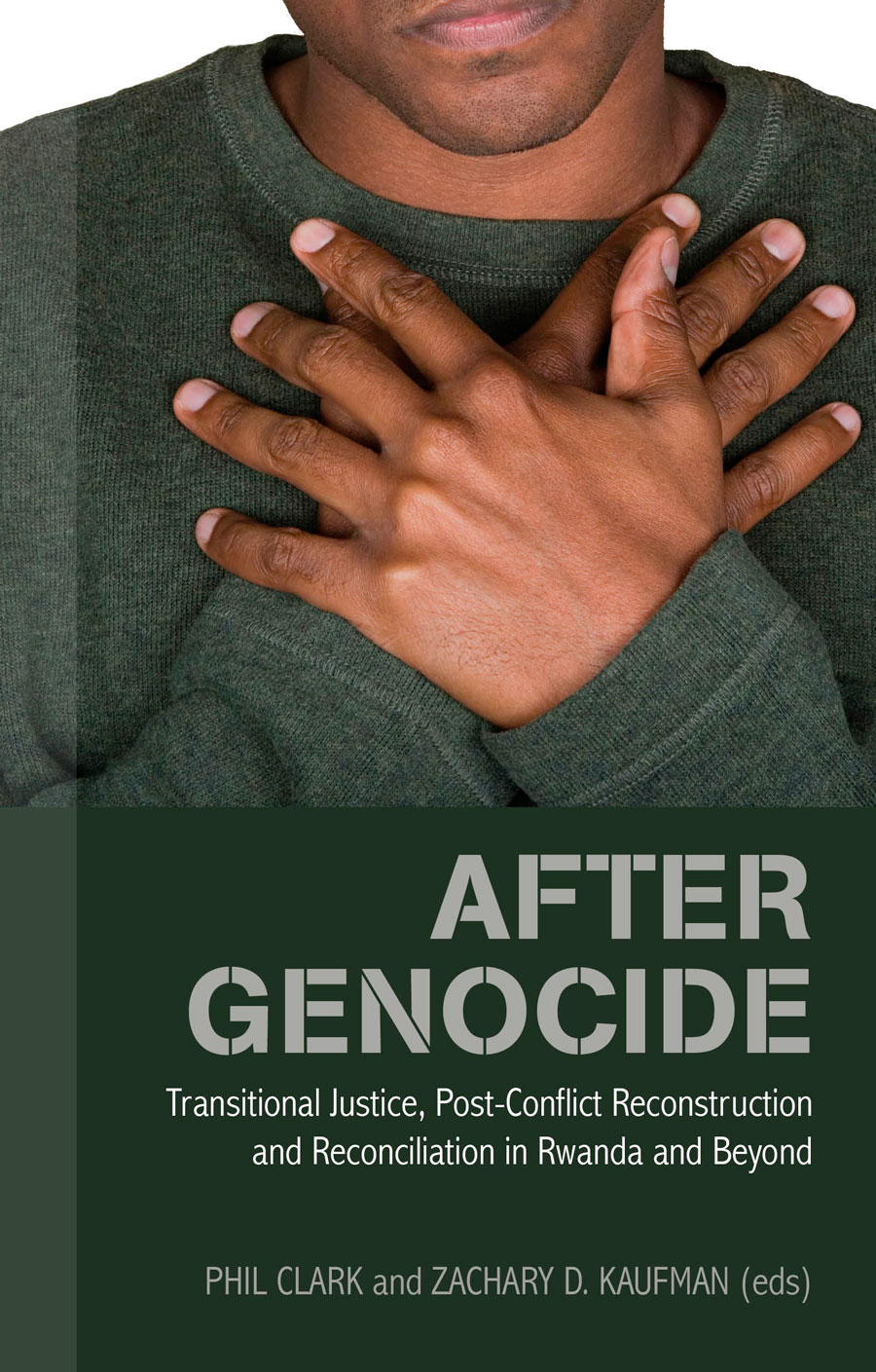
After Genocide
Transitional Justice, Post-Conflict Reconstruction and Reconciliation in Rwanda and Beyond
Phil Clark and Zachary D. Kaufman (editors)
Table of Contents
Acknowledgements
Note
Abbreviations
Glossary
The Contributors
Preface – President Paul Kagame
Foreword – Luis Moreno Ocampo
Part I. Introduction and Background
- After Genocide
Phil Clark and Zachary D. Kaufman - The Past is Prologue: Planning the 1994 Rwandan Genocide
Linda Melvern - Without Justice, No Reconciliation: A Survivor’s Experience of Genocide
Jean Baptiste Kayigamba - The Peacekeeping System, Britain and the 1994 Rwandan Genocide
Paul D. Williams
Part II. Politics of Memory, Identity and Healing
- The Politics of Memory in Post-Genocide Rwanda
René Lemarchand - Reconstructing Political Identities in Rwanda
Helen Hintjens - Genocide-Laundering: Historical Revisionism, Genocide Denial and the Role of the Rassemblement Républicain pour la Démocratie au Rwanda
Tom Ndahiro - We are Pretending Peace: Local Memory and the Absence of Social Transformation and Reconciliation in Rwanda
Susanne Buckley-Zistel - Confronting Conflict and Poverty through Trauma Healing: Integrating Peace-building and Development Processes in Rwanda
Solomon Nsabiyera Gasana - Only Healing Heals: Concepts and Methods of Psycho-Social Healing in Post-Genocide Rwanda
John Steward
Part III. Post-Genocide Transitional Justice, Reconstruction and Reconciliation
- Establishing a Conceptual Framework: Six Key Transitional Justice Themes
Phil Clark - Post-Genocide Justice in Rwanda: A Spectrum of Options
William A. Schabas - The United States Role in the Establishment of the United Nations International Criminal Tribunal for Rwanda
Zachary D. Kaufman - The Contribution of the United Nations International Criminal Tribunal for Rwanda to the Development of International Criminal Law
Hassan Bubacar Jallow - Prosecuting Genocide in the Digital Age: An Information Management Perspective
Maria Warren and Alison Cole - The Rules (and Politics) of Engagement: The Gacaca Courts and Post-Genocide Justice, Healing and Reconciliation in Rwanda
Phil Clark - The Institutionalisation of Impunity: A Judicial Perspective of the Rwandan Genocide
Martin Ngoga
Part IV. Legal and Institutional Lessons after Rwanda
- The Rwanda Effect: The Development and Endorsement of the “Responsibility to Protect”
Jennifer M. Welsh - Some Lessons for the International Criminal Court from the International Judicial Response to the Rwandan Genocide
Morten Bergsmo and Philippa Webb - Balancing Justice and Order: State-building and the Prosecution of War Crimes in Rwanda and Kosovo
Dominik Zaum - Tensions in Transitional Justice
Phil Clark, Zachary D. Kaufman and Kalypso Nicolaïdis
This book should be labelled “for the mature individual only”. But for that mature individual it is of extreme interest. It shows, far from any Manichean stereotyping, the many facets of having to try to live in an impossibly complex social and human situation. Highly recommended.
- Gérard Prunier
The Rwanda Crisis: History of a Genocide (Hurst, 1995)
Other Books
Social Entrepreneurship in the Age of Atrocities
Changing Our World